
Every tie we make begins as a mulberry leaf. Between the leaf and the knot lies one of the oldest supply chains in the world, and at several turns it runs through the history of the Church.
A small wonder of creation
The silkworm has been raised by men for so many thousands of years that it can no longer live in the wild. The adult moth can't even fly. The worm eats almost nothing but mulberry leaves, and in about a month it grows thousands of times heavier than when it hatched. Then it stops eating and spins a cocoon from a single unbroken thread, hundreds of yards long.
To make silk, the cocoons are softened in hot water, the fine ends are found, and several filaments are reeled together into one thread. By one common estimate, a single silk tie takes about 110 cocoons.
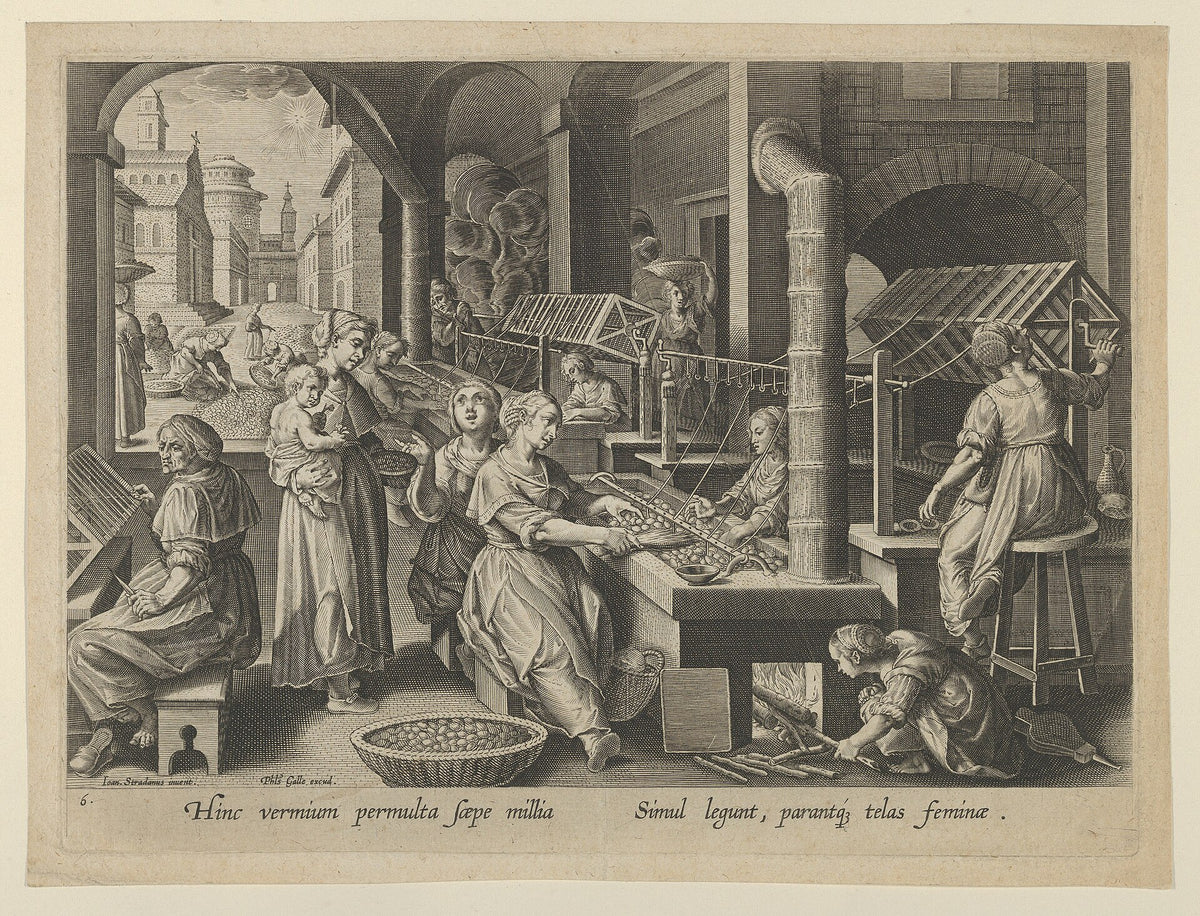
Reeling silk from the cocoons. Engraving after Stradanus, from the series "Vermis Sericus," about 1595. The Metropolitan Museum of Art.
A road across the world
Chinese tradition credits the discovery to the Empress Leizu nearly 5,000 years ago: a cocoon fell into her tea, and as it softened she began to unwind a shining thread. However it began, China guarded the method for many centuries.
By the second century before Christ, silk was moving west along caravan routes through Central Asia and Persia to the Mediterranean, the network we now call the Silk Road. Rome couldn't get enough of it. Pliny the Elder complained that the Empire was pouring its gold into the East for luxuries, and in AD 16 the Roman Senate decreed that men should not "disgrace themselves" by wearing silk. We'll take our chances.
Missionaries used the same road. Christians from the Middle East reached the Chinese capital in the year 635. A stone monument raised there in 781 still records their coming.
A saint on the silkworm
The Fathers of the Church knew silk, and they noticed the worm. In the fourth century, St. Basil the Great preached a famous series of sermons on the six days of creation. In one of them he describes "the horned worm of India" and the strange way it changes its form again and again.
Then he turns to the women of his congregation, who wove with silk sent from China, and gives them a sermon in a sentence: when you sit at that work, remember the worm's transformation, and believe in the resurrection of the body, the change St. Paul promises when "we shall all be changed" (1 Corinthians 15:51).
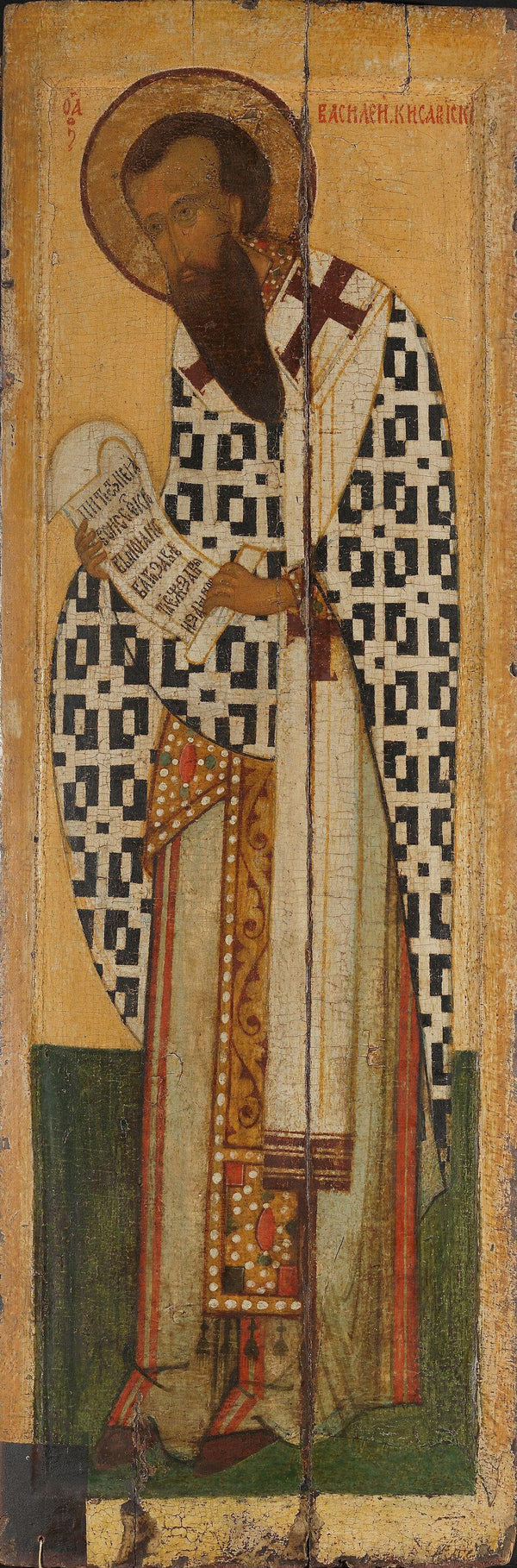
St. Basil the Great. Icon, Novgorod school, 15th century.
Two monks and a hollow cane
For centuries everyone west of China could only buy silk, never make it. The secret finally got out thanks to two monks.
In the 550s, the two of them, who had traveled and preached in the East, came to the Emperor Justinian in Constantinople. They had seen how silk was made. Justinian sent them back, and they returned with silkworm eggs, hidden, as the story is told, inside hollow canes.
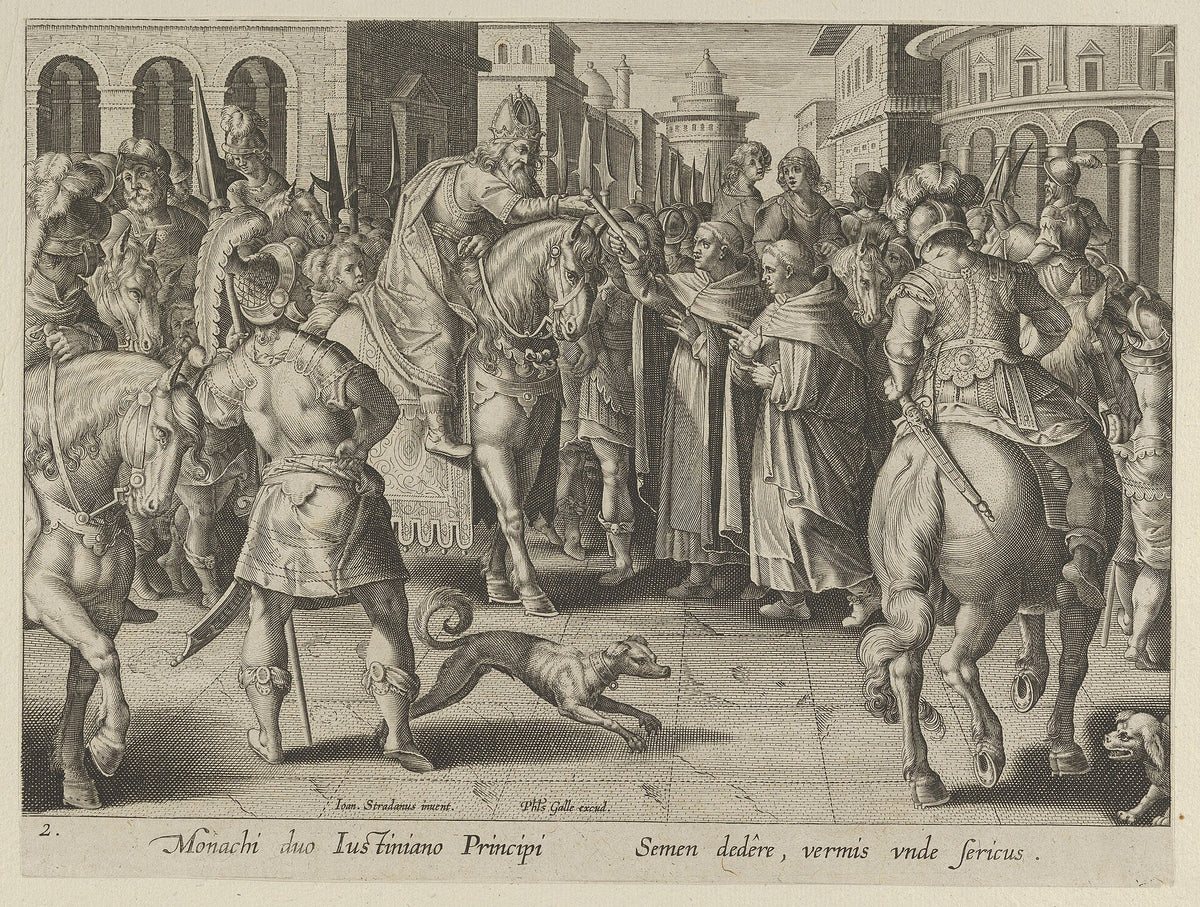
Two monks present silkworm eggs to the Emperor Justinian. The Latin reads: "Two monks gave Prince Justinian the seed from which the silkworm comes." Engraving after Stradanus, about 1595. The Metropolitan Museum of Art.
That smuggling run founded the silk industry of the Christian East. For roughly the next 650 years, Byzantine silk was among the most prized cloth in the world. It vested emperors and bishops, hung in churches, and in the cathedrals of Europe it was used to wrap the relics of the saints. Our Byzantine Cross tie is a nod to that world.
Lyon: a silk city and a Catholic one
Silk weaving spread to Italy and then to France, where Lyon became the silk capital of Europe. In 1804, a Lyon weaver named Joseph Marie Jacquard perfected a loom that used punched cards to weave complex patterns automatically. Those punched cards later helped inspire the first computers, and every jacquard-woven silk tie today descends from his loom.
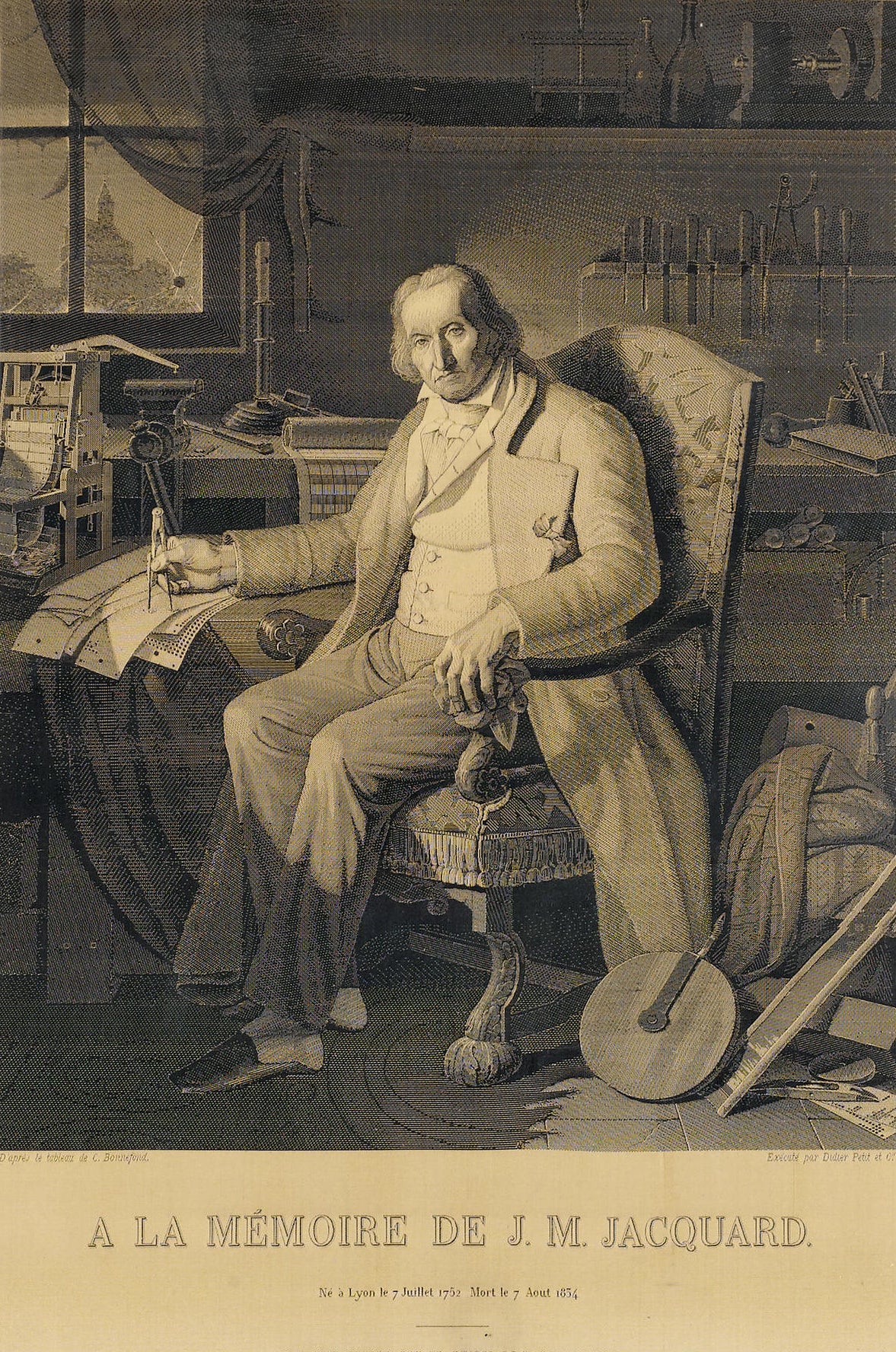
A portrait of Joseph Marie Jacquard, itself woven in silk on a Jacquard loom. Lyon, 19th century.
Lyon's silk also gave the Church one of her great laywomen. Pauline Jaricot was the daughter of a Lyon silk-factory owner. As a young woman, she asked the women who worked in a silk factory run by her family to pray for the missions and give one penny a week. Those pennies grew into the Society for the Propagation of the Faith, founded in 1822, which still funds the Church's missions around the world. She also founded the Living Rosary in 1826. Pauline was beatified in Lyon in 2022.
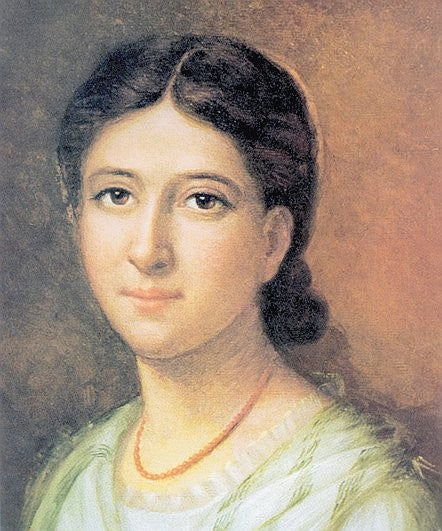
Blessed Pauline Jaricot (1799–1862).
Where our silk comes from
Every tie we make is 100% mulberry silk from China, where silk has been made longer than anywhere else on earth. We design every one ourselves.
Silk for Sunday
For centuries the Church dressed her altars and her priests in silk, because the best materials belong to the worship of God. A man's necktie isn't a vestment, but it comes from the same instinct.
And if St. Basil had his way, you would think about the Resurrection while you knot your tie.
Shop our silk neckties
Byzantine Cross Silk Necktie · Chi Rho Regimental Silk Necktie · Keys of St. Peter Silk Necktie · All neckties
Related reading: Silk vs. Microfiber: What You're Actually Paying For in a Tie · Can Catholics Claim the Necktie?
Images: Stradanus and Galle, Vermis Sericus, c. 1595 (The Metropolitan Museum of Art); St. Basil the Great, Novgorod school, 15th c. (National Museum, Oslo); woven silk portrait of J. M. Jacquard, Lyon; portrait of Pauline Jaricot. All public domain.