
In a product photo, a silk tie and a polyester tie can look identical, and every listing calls itself premium. Here is what actually separates them, and why every tie we make is 100% mulberry silk with a wool interlining.
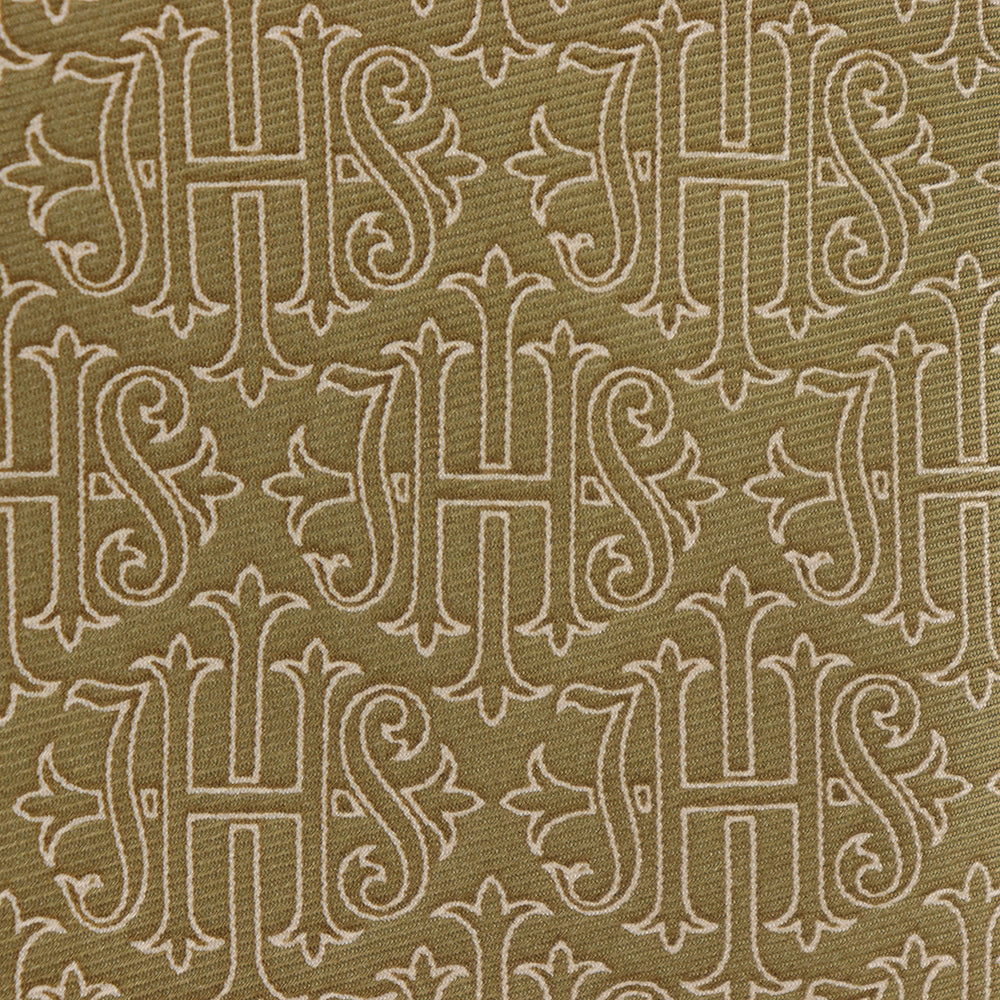
Close-up of our JHS Christogram tie, named for the ancient monogram of the name of Jesus. 100% mulberry silk.
First, "microfiber" means polyester
A lot of ties are now sold as "microfiber." It sounds technical. It is polyester (occasionally nylon) spun into a very fine thread. Finer thread makes a softer, smoother fabric than the polyester of thirty years ago, and that is a real improvement. But it is still plastic made from petroleum, and it behaves like plastic.
Silk is a protein fiber, spun by a silkworm. Mulberry silk comes from worms raised on mulberry leaves, and it gives the long, smooth, even filament that the finest silk is made from.
Here is where you'll notice the difference.
1. The knot
Silk has grip. It cinches into a firm knot, holds a dimple, and stays put through Mass, a wedding reception or a full day at work. Polyester is slicker. It fights the knot, tends to loosen as the day goes on, and won't hold a dimple.
2. The drape
A tie should hang straight down your shirt and move with you. Much of that comes from the part you never see: the interlining, the layer sewn inside the tie. Ours is wool. Wool gives the tie weight and body, fills out the knot, and springs back, so yesterday's creases relax overnight. Many inexpensive ties use a thin synthetic interlining instead, and they twist, curl and hang limp.
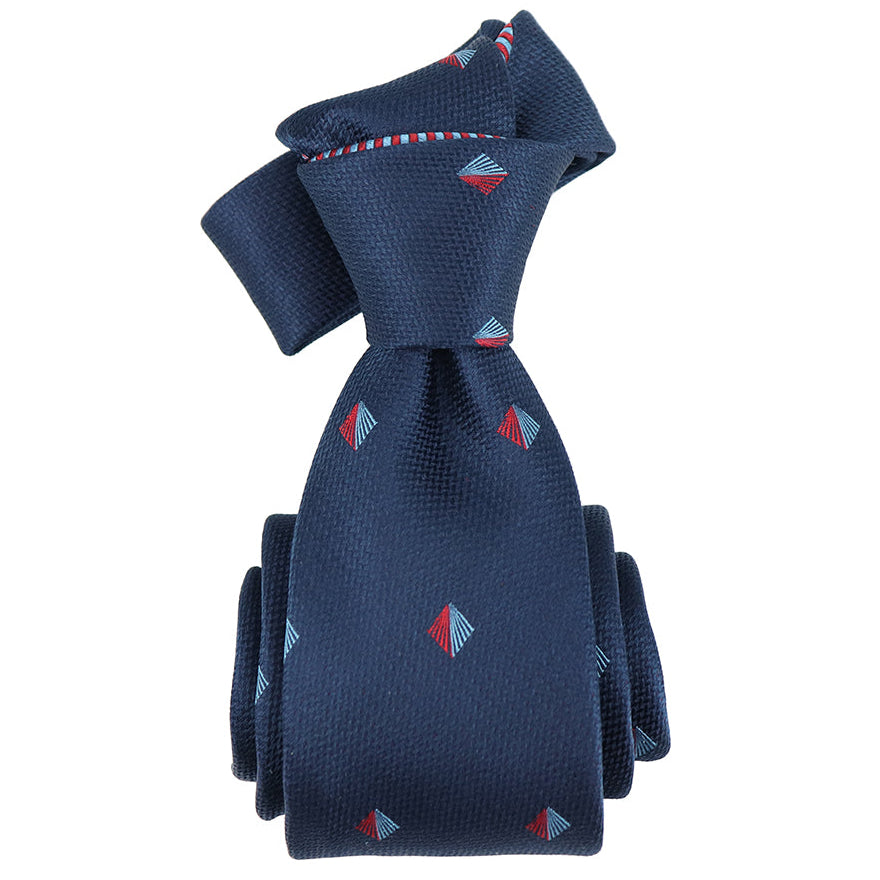
Silk takes color with depth: our Divine Mercy tie.
3. The color
A silk fiber is shaped like a tiny prism, and it catches light at different angles. That is why silk has depth: a burgundy looks like wine, not paint. Polyester has an even, uniform shine that reads flat, sometimes glassy, especially under church lights or a camera flash.
Woven or printed: what the terms mean
Every one of our ties is 100% mulberry silk, but they are not all made the same way. We choose the method that suits the design:
- Woven. The pattern is built into the fabric thread by thread on the loom. You can feel the texture, and it has the most depth.
- Screen printed. The design is printed onto the silk one color at a time through fine screens. Crisp lines and rich, solid color, which is classic for small repeating motifs.
- Digitally printed. The design is printed straight onto the silk, which allows the fine detail and many colors that sacred art often calls for.
All three are legitimate. The silk underneath is the same.
How to tell silk from polyester
- Read the label. It should say 100% silk. If it says microfiber or polyester, or says nothing, it isn't silk.
- Feel it. Silk feels cool at first touch and warms quickly in your hand. Polyester feels slick and stays slick.
- Tie it. Silk holds a dimple. Polyester lets it go.
- The burn test, for the curious. Light a single loose thread. Silk burns slowly, smells like burnt hair and leaves a soft ash that crumbles. Polyester melts into a hard black bead and smells like chemicals. Don't try this on a tie you plan to wear.
About the price
Ours are $65. That's more than a lot of ties cost, so it's fair to ask whether silk is worth it.
Do the math on a tie you actually wear. Twice a month for ten years is 240 wearings. At $65, that's about 27 cents a wearing.
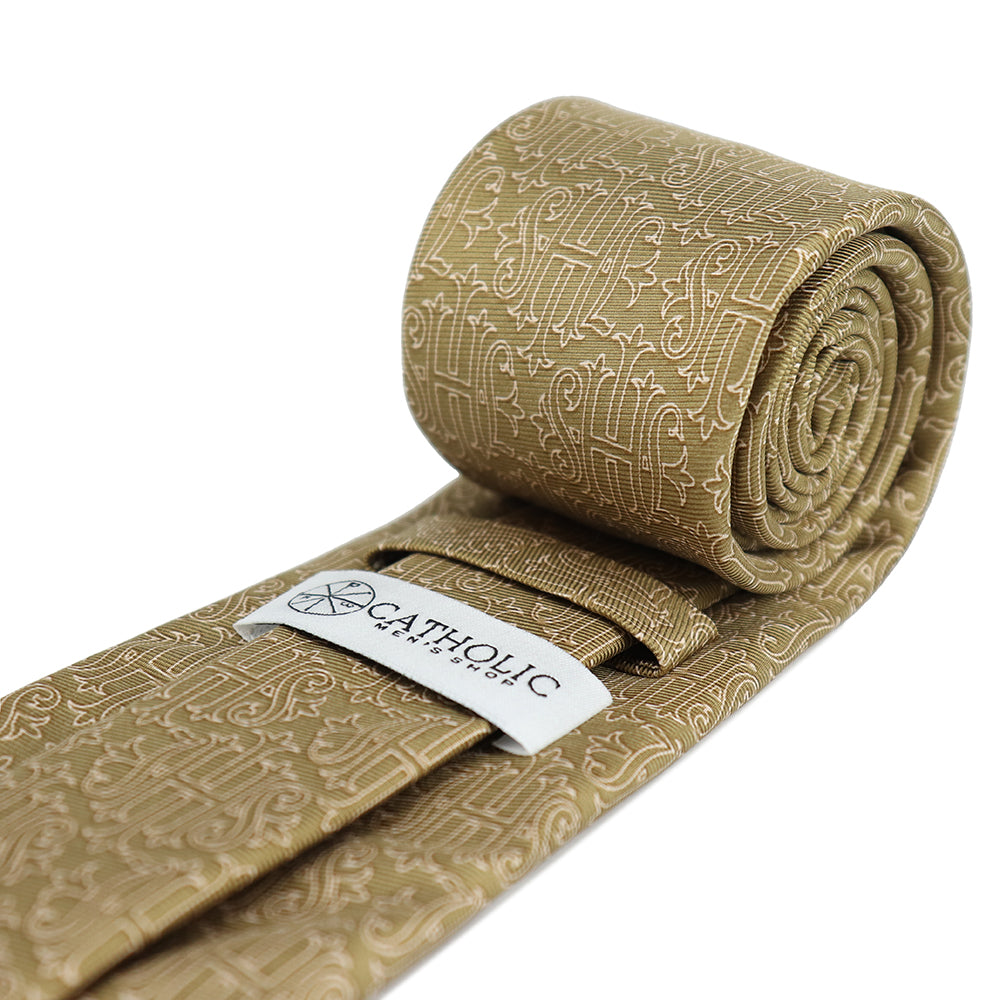
Roll a silk tie loosely and let the wool interlining rest between wearings.
Caring for a silk tie
Silk is a natural fiber and asks for a little care. Treat it right, and a silk tie with a wool interlining keeps its shape for years. Plenty of men hand them down.
- Untie it by reversing the knot. Never yank the narrow end through.
- Hang it or roll it loosely, and give it a day off between wearings so the wool can relax.
- For wrinkles, steam it, don't iron it. If you must iron, use low heat through a cloth.
- Spot-clean gently. Dry-clean sparingly, because it flattens the tie.
Shop our silk neckties
JHS Christogram Silk Necktie · Keys of St. Peter Silk Necktie · St. Michael Silk Necktie · All neckties
Related reading: The Catholic Story of Silk · How to Wear a Suit and Tie